
Dental Implants Montague
The Most Lifelike Solution for Missing Teeth

Compared to dentures or dental bridges, dental implants in Montague stand a cut above. These restorations replace whole teeth instead of just crowns and have beautiful, lifelike results. We at Montague Dental ensure that much by performing implant placement in-house. We’re able to handle everything from single implant posts to All-On-X treatments and more. If you’d like further details, keep reading or come chat with us at a one-on-one consultation.
Why Choose Montague Dental for Dental Implants?
- Dental Implant Placement Done In-House
- CT Cone Beam Scanner for Treatment Planning
- Dentist with Extensive Experience in Dental Implants
What are Dental Implants?
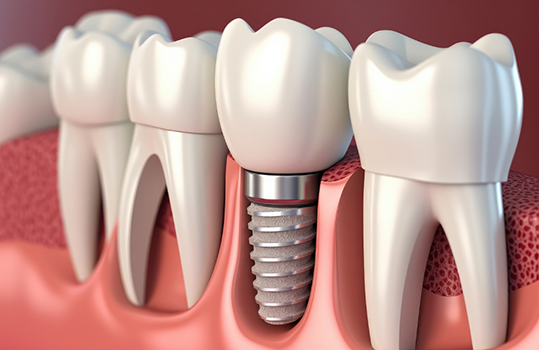
Dental implants are small, tooth-sized posts made of strong titanium. In terms of design, they’re made to act as alternative tooth roots for your now-missing teeth.
Dental implants work so well due to the unique placement method they use. Namely, dentists set them in your jaw’s empty sockets (rather than on your gums) to fuse with nearby bone tissue. This ensures the implant posts fuse with (and stimulate the growth of) nearby bone tissue, becoming secure parts of your jawbone.
The 4-Step Dental Implant Process
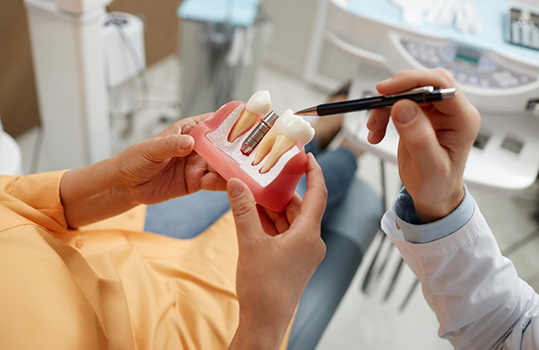
Since dental implants are more complex than dentures or dental bridges, getting them can take months. There’s no need to fear, though; the posts have benefits worth this time and effort! We at Montague Dental place dental implants in-house to ensure you get quality results. In other words, Dr. Roth will supervise your treatment and make your new teeth look and feel great! The procedure will involve four key phases: consultation, surgery, osseointegration, and delivery of the final restoration.
Initial Dental Implant Consultation

To start things off, you’ll meet Dr. Roth (and the rest of our team) for a consultation. Doing so lets us learn your smile goals, current oral health, and other key factors. We’ll then use those details to see if dental implants suit you and adjust your final treatment plan.
If we initially decide you don’t qualify for treatment, please don’t worry. You can become a good candidate later through extra dental work – gum disease therapy, tooth extractions, etc. By undergoing such procedures, your mouth would become strong enough to support dental implants.
Dental Implant Surgery

Our office places dental implants in-house, with Dr. Roth himself supervising the surgery. That means you’ll benefit from our team’s skills and expertise throughout the placement. As a result, you’re sure to get excellent results that you can proudly show off to your peers.
Our office’s dental implant surgery always involves specific steps. First, Dr. Roth will numb the treatment site to prevent pain during care; you’ll only feel a slight pressure as he works. He and our team will then make an incision in your gums to make room for the final implant. With the incision made, we’ll place the implant and suture your gums shut. Our team will conclude your treatment by putting a protective cap over your post.
Dental Implant Osseointegration & Abutment
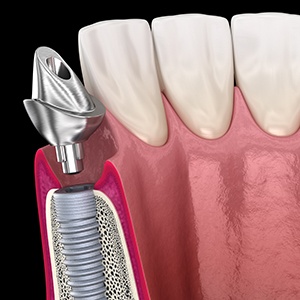
Following your initial surgery, your dental implant will start fusing with your jaw. This 4–6-month process (“osseointegration”) ensures the post is firmly rooted in your jawbone. Once it’s done, you’ll sport a new “tooth” that’s secure, stable, and a permanent part of your mouth.
You’ll undergo a follow-up surgery soon after the implant fusion. At that time, we’ll place an abutment – a metal connector – on your implant to secure its final restoration. This latter component will be crafted while you recover from the abutment work.
Delivery of Dental Implant Restoration(s)
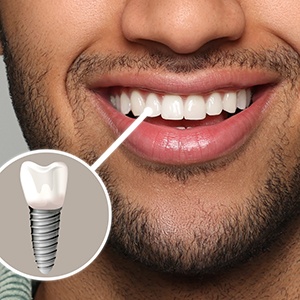
For the final step of your treatment, our team will deliver your final restoration. This process involves setting a dental prosthetic that “matches up” with how many teeth you’ve lost. Depending on your situation, the device could be a dental crown, dental bridge, or implant denture.
The actual fitting of your final restoration shouldn’t take long. It can usually be done by applying some dental cement to your abutment. From there, we’ll ensure your restoration is secure and make last-minute changes. You can then enjoy your newly restored smile!
Benefits of Dental Implants

Through dental implant treatment, you’ll get to enjoy benefits like:
- A Gorgeous, Lifelike Smile – Dental implants are capped with porcelain restorations so each one blends seamlessly with your smile.
- High-Success– When placed by a qualified dentist, dental implants have a long-term success rate of over 95%!
- A Younger-Looking Face – Because dental implants stimulate your jawbone, they keep your face looking full, youthful, and vibrant.
- Easy Eating – Dental implants restore your bite force enough to help you chew tough foods.
- Long-Lasting Results – Given proper care, dental implants can last 20 to 30+ years.
Who Dental Implants Can Help

Dental implants are extremely versatile. After all, they can replace one, a few, or an entire arch of missing teeth! So, if you are struggling with tooth loss and want to have a complete, confident smile again, don’t hesitate to schedule an appointment with our team at Montague Dental! You can also read on to learn more, including the different types of dental implants that we offer at our office.
Who Is a Good Candidate for Dental Implants?

There are a few qualities that we look for in a good dental implant candidate, including a strong jawbone and healthy gums. If you have any remaining natural teeth, it’s important that they are healthy as well. If you don’t initially meet these criteria, however, you shouldn’t panic. Since we offer gum disease treatment, tooth extractions, and several other restorative treatments, we’ll likely be able to provide the preliminary care you need at our office, streamlining the entire process.
Missing One Tooth
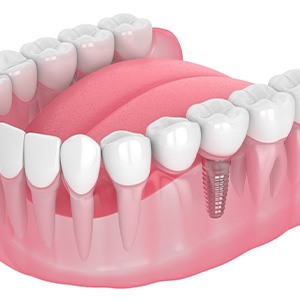
Unfortunately, even just one missing tooth can lead to several issues, including low self-esteem and dental drift. That’s why we recommend exploring your treatment options, like dental implants! If we determine that you’re a good candidate, then we will secure the implant to your jawbone and allow time for the two to fuse together. Then, we will place a custom dental crown on top with an abutment, restoring the visible portion of the tooth structure as well.
Missing Multiple Teeth
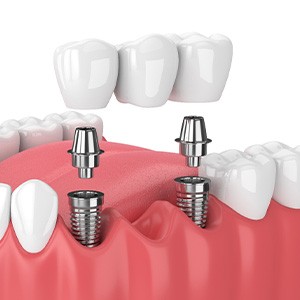
Are you missing several teeth in a row or throughout an arch? If so, you’ll be happy to hear that dental implants are still an option! With implant-retained bridges and partial dentures, we can fill the gaps in your smile while preserving the alignment and health of your remaining natural teeth. Not only that, but the implant posts stimulate the jawbone, which helps prevent bone loss, maintain the strength of your bite, and restore the confidence that you lost.
Missing All Teeth
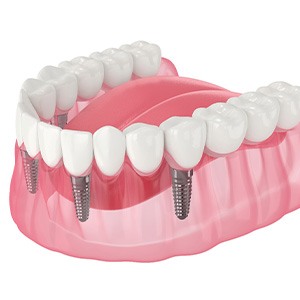
Dental implants can also give you an entirely new row of teeth! If we determine that you’re a good candidate, then we will strategically place a few dental implants throughout the arch. Then, we will secure a custom denture on top. There are several perks that come with this smile-rebuilding solution, starting with the fact that it provides unmatched stability. It’s also worth noting that, with proper maintenance, dental implants can last for 30+ years, too!
Understanding the Cost of Dental Implants
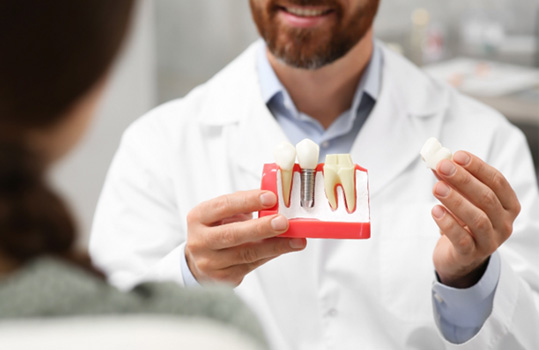
When it comes to restoring your beautiful smile, you truly do get what you pay for. Dental implants aren’t just replacement teeth: they’re an investment in your health, confidence, and quality of life. Because this treatment is highly customizable, prices can vary dramatically from patient to patient. At Montague Dental, we want you to feel confident in your decision to get dental implants, so it is our mission to ensure that you always have an accurate estimate of your cost of treatment before we begin. Furthermore, our team will do our best to make your treatment as affordable as possible by maximizing your dental insurance benefits, and by accepting flexible financing plans through our preferred lender, CareCredit.
While we understand that dental implants are more expensive than other tooth restorations, most patients find that their benefits are well worth the investment. Because they’re likely to last you a lifetime, they could even be the most cost-effective option overall!
Preliminary Treatments & Dental Implant Surgery

Preliminary dental treatments such as gum disease therapy, tooth extractions, and bone grafting will all add to the overall cost of your dental implant treatment. Although they will increase the price, please understand that they are a vital step for maximizing the success of your new smile. Thankfully, many of these treatments are at least partially covered by most dental insurance plans.
Dental implant surgery will incur its own separate cost and can vary depending on where the implants are placed in the jaw, as well as which type of anesthesia is required.
At Montague Dental, we proudly and conveniently provide the entire dental implant treatment in-house, so you don’t have to worry about working with an outside surgeon or paying multiple doctors for your care.
The Parts of Your Dental Implant
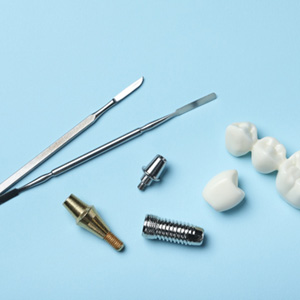
The parts of your dental implant all incur separate costs as well, and can vary depending on:
- The number of dental implants needed: One dental implant for a single missing tooth will cost less than four to six dental implants for an implant denture; however, an implant denture will cost less than replacing each tooth separately.
- The type of restoration: Crowns (single teeth), bridges, and implant dentures each cost different amounts. The general rule of thumb is the smaller the prosthetic, the less expensive it will be.
- The size or material: Some dental implants are made longer or shorter depending on where they must be placed within the patient’s jaw. Furthermore, some are made from zirconia instead of titanium.
- The brand of dental implant: Much like smartphones or cars, different manufacturers make different dental implants to cater to the unique needs of patients. Your dentist can discuss his or her recommendations for which is best for you during your consultation.
How Dental Implants Can Save You Money
Often, patients can be tempted to choose dentures or dental bridges instead of dental implants because of their lower upfront cost. What they may not realize, however, is that the one-time cost of dental implants is often more cost-effective in the long run. That’s because with dental implants you won’t need to pay for replacements or adjustments every five to ten years like you would with other options, nor will you have to spend money on special pastes, cleaning solutions, or adhesives.
Furthermore, since your dental implants won’t wear down your natural teeth or irritate your gums like dentures do and are easier to keep clean, they can even help you prevent dental problems like gum disease, tooth decay, and jawbone deterioration and their associated treatment costs. Studies have also shown that having good oral health can lower your risk of systemic issues as well as their associated treatment costs!
Does My Dental Insurance Cover Dental Implants?

Although most dental insurance plans don’t typically cover dental implants, there are sometimes exceptions. At Montague Dental, our team will gladly review the details of your plan. We have many years of experience maximizing benefits and can often find ways to make the most of your coverage. Portions of treatment may be covered, such as a percentage of your final restoration or any necessary preliminary treatments.
Making Dental Implants Affordable

At Montague Dental, it is our mission to make dental treatments as affordable as possible. To that end, we proudly welcome many dental insurance plans, as well as flexible financing through our preferred third-party lender, CareCredit. With these plans, you can break up the cost of your dental implant treatment into multiple, low-to-no-interest monthly payments that are better suited to your budget.
Dental Implant FAQs
How Long Do Dental Implants Last?
One of the major advantages that dental implants have over traditional restorations is that they can last for thirty years or more if they receive excellent care. If you wish for your dental implants to last for life, it’s an excellent idea to stick to a proper daily oral hygiene regiment that includes brushing, flossing, and rinsing with antibacterial mouthwash to eliminate infection-causing plaque and food debris. Tobacco use is one of the leading causes of gum disease and dental implant failure, and overindulging in hard or sticky foods or using your teeth to open packages or bottles are also great ways to damage both your natural and artificial teeth. Avoiding these habits can go a long way towards your implants lasting for as long as possible.
Does Getting Dental Implants Hurt?
Since the jawbone doesn’t have many nerve endings to begin with, the potential for discomfort during the procedure is relatively low in the first place. The dental implant placement process always begins with the patient receiving a local anesthetic to render the procedure painless, and they may also receive sedation treatment if they need a little more help staying calm and comfortable. After the procedure, your mouth may be sore for a few days, but this can be addressed with a cold compress or by taking prescribed or over-the-counter pain medication as directed. The discomfort should fade during the days after the procedure, but call our Montague office if your soreness seems to be getting worse after two or three days.
How Successful Are Dental Implants?
As long as they are placed by a qualified professional and the patient is of adequate oral health, dental implants boast an incredible success rate of over 95% even ten years after placement. The long-term success of your implants will mostly be determined by habits such as your oral hygiene regimen, your eating patterns, and how frequently you attend your recommended dental checkups. The position of your implant can impact how long it lasts as well. For example, an implant in the back of the mouth may not last as long since the molars experience more pressure than the front teeth when chewing.
What Can Cause Dental Implants to Fail?
While dental implant failure is not common, it usually happens for one of two reasons, those being peri-implantitis and failed osseointegration. Peri-implantitis is an infection that develops in the gum around a dental implant due to poor oral hygiene, and it can loosen the appliance by eroding the soft tissue and bone structure supporting it. Failed osseointegration refers to when the titanium post of an implant does not fuse properly with the surrounding bone structure, depriving it of the foundation it needs to function properly. Implants can also fail due to frequent teeth grinding, tobacco use, poor hygiene habits, the side effects of certain medications, the head or neck being exposed to radiation, and health conditions such as osteoporosis, cancer, or diabetes. If you deal with any of these issues, be sure to mention them during your implant consultation so our dentist can design your treatment plan to minimize your risk of implant failure.