
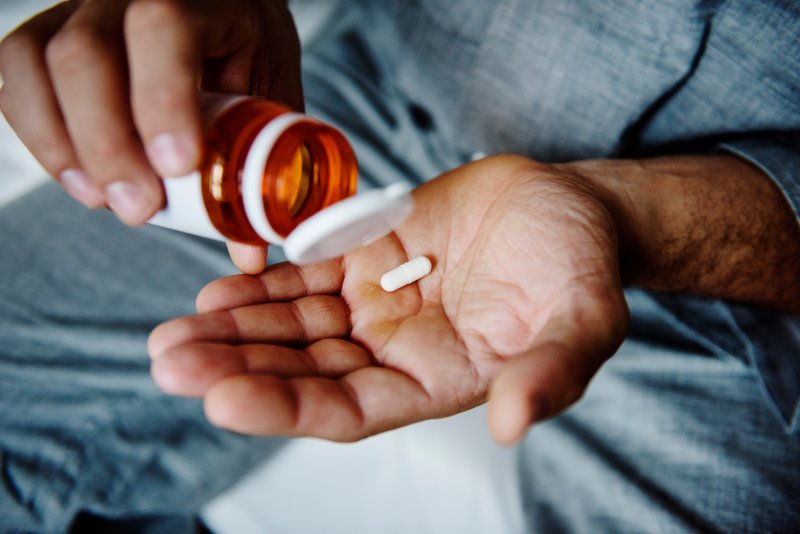
While today’s dental treatments are often painless, they can still leave your mouth slightly sore afterward. It wouldn’t be odd to have sensitive teeth and gums once your procedure is over. Thankfully, you can use over-the-counter pain medications to manage your post-care aches. Your Montague dentist will even suggest some good ones to make the selection process easier. Just keep reading to learn about four great OTC pain medications to use after a dental treatment.
Acetaminophen
When you’ve just had dental work, one pain reliever that might suit you is acetaminophen. It’s quite good at easing smile-related soreness.
Acetaminophen – better known by the brand name Tylenol – blocks your brain’s pain signals and reduces fever. As such, patients can usually trust it to lessen (or even stop) mild to moderate dental discomfort. Just note that acetaminophen lacks anti-inflammatory effects, so it doesn’t do much to prevent infections. It also shouldn’t be used if you have liver disease or drink alcohol a lot.
Ibuprofen
Another time-tested, well-known medicine worth considering is ibuprofen, which is sold under the brand names Advil and Motrin. It could be just what you need to manage your mouth pain.
Ibuprofen is an NSAID, or “nonsteroidal anti-inflammatory drug.” It thus reduces inflammation, swelling, and pain by inhibiting prostaglandins, the chemicals responsible for such symptoms. This effect makes ibuprofen especially helpful for throbbing toothaches and other post-dental care pain. However, it shouldn’t be used by people with stomach ulcers, kidney disease, or severe asthma.
Aspirin
Also called Bayer or Bufferin, aspirin is a reliable and accessible painkiller. You’d do well to give it serious thought as a potential aid for your ache.
Aspirin counts as an NSAID like ibuprofen, but it also has unique qualities. Besides reducing aches and inflammation, it has blood-thinning properties as well. That means aspirin can help prevent blood clots even as it treats mild dental pain. In exchange, though, it can increase the risk of bleeding; it also shouldn’t be placed directly on the gums or teeth.
Benzocaine
Benzocaine is the last (but certainly not least) medication we’ll look at here. Sold under the names Orajel and Anbesol, it does a lot to relieve dental pain.
As a topical anesthetic, benzocaine takes the form of gels, creams, and sprays. It quickly provides relief when used directly on one’s teeth or gums, blocking the relevant pain signals to reduce discomfort. The drug should only be used sparingly, though; the user could otherwise experience irritation or allergic reactions. Benzocaine also mustn’t be used by children under 2, as they might develop complications.
For more details on over-the-counter pain medications, consult your dental provider; they’ll gladly share what they know. Just don’t rely on these medicines for chronic discomfort, as dedicated treatment is far superior at fixing the latter.
About the Practice
Montague Dental is based in Montague, NJ. Led by Drs. Oshidar, Roth, and Crincoli, our private practice offers excellent dentistry that can help any smile. With treatments that range from dental checkups and cosmetic work to lifelike replacement teeth, we proudly tailor your care to your needs. Our team also provides comfort-focused amenities to keep your care as gentle and pain-free as possible. For more details or to book a visit, please contact us at our website or by phone at (973)-293-3404.